




With the right keywords, you focus your writing on things your readers care about. It also aids Google in understanding what your blog is about so that it may promote it to the right set of people. Without keyword research, it's like writing in the dark- nobody may discover your work, no matter how well written it is.
But, there is good news for you: if you follow the step-by-step guide presented here by using the tools mentioned, anyone at all can learn how to do keyword research for blog posts and come up with proper keywords for building the blog traffic.
Let’s understand how keyword research for blog posts can be done without much confusion.
Step 1 - Identify Your Audience and Niche
Before you do keyword searching, take some time to ask yourself: "Who am I writing for?" and "What do I wish to work in?"
Knowing your audience is the only way to get the right keywords. A fitness blog for beginners will have different keywords than one targeted at advanced-level bodybuilding. So it is very important to be aware of your niche and what interests your readers.
Understand the Intent Behind Keywords
Not all keywords are the same. People search on Google for different reasons. Some want to learn something, others compare products, and some are ready to buy.
The reason behind their search is called keyword intent. If you can match your content with that intent, your blog is more likely to be useful and rank better.
There are three main types of keyword intent:
- Informational Intent – People who search with informational intent want to learn something. They’re not ready to buy, just trying to understand a topic or solve a problem. These keywords usually include words like: how, why, what, guide, or tutorial.
Example: How to fix a flat bike tire This person knows they have a problem and is looking for a solution -
Use informational keywords when writing blogs, how-to guides, or educational articles.
- Commercial Intent – Commercial intent means the person is doing research. They may not be ready to buy just yet, but they’re getting close. They want to compare options and see what’s best. These keywords often include: best, top, compare, review, or versus.
Example: Best inner tubes for road bikes This person is solution-aware and wants to make an informed choice -
Use these keywords in product comparisons, listicles, and reviews.
- Transactional Intent – These people are ready to buy, sign up, or download. Whatever they're looking for, they just want to be in the right place to get it. These keywords include: buy, shop, for sale, order online, or sign up.
Example: Buy tire tubes online This person is ready to act, and your content should guide them directly to it -
Use transactional keywords on product pages, landing pages, or service pages.
Step 2 - Start with Basic Topics
Before jumping into advanced keyword tools, begin with something simple — a topic you already know and want to write about. Once you have that, think of a few words people might type into Google to find that topic. These basic keywords will help you move in the right direction.
Choose a Blog Topic or Idea You Want to Write About
Start by picking a topic that you want to write about. It might be something you're passionate about or something your audience is craving. For example, let's say your topic is: Best courses for girls after 12th commerce
This is a specific topic, and it helps you focus your keyword research better.
Think of a Few General Keywords
Now that you have a topic, start listing a few broad or general keywords related to it. These don’t have to be perfect. Just think like your reader.
You might come up with keywords like:
- Courses after 12th commerce
- Best courses for girls
- Career options after 12th commerce
# There are three simple ways to find even more keyword ideas:
- Way 1: Use Your Own Thinking
This is the easiest and most natural place to begin. Just sit down with a pen and paper (or open a blank note on your phone) and think about how you would search for the topic on Google.
Ask yourself:
- What would I type if I wanted to find this information?
- What would my friend or younger cousin type?
- Are there common questions people ask about this?
For example: if your topic is best courses for girls after 12th commerce, you might think of:

The goal here isn’t to be perfect. It’s to put yourself in your reader’s shoes. Think like someone who is searching — not writing. Even 10–15 simple keyword ideas from your own mind can give you a strong start before using any tools. Once you’ve got these, you can move on to the next steps and refine your keyword list with real data.
- Way 2: Use the Google Search Bar (Auto-Suggest)
Go to Google and start typing your topic — Google will automatically show you suggestions below the search bar. These are real searches by real people. They can give you some great keyword ideas.
For example, typing "courses after 12th commerce" might show suggestions like:

- Way 3: Check the Bottom of the Google Search Page (Related Searches)
Scroll to the bottom of the search results page. You’ll see “Related searches” — these are also known as LSI (Latent Semantic Indexing) keywords. They help you find related terms and ideas that people are also looking for.
For example: for the same topic, related searches might include:

These three simple steps help you build a strong list of keyword ideas before you move to any paid or advanced keyword research tools.
Step 3 - Get Related or Matching Keyword Ideas
Once you have a few basic keyword ideas, the next step is to use keyword tools to discover even more related terms. These tools helps you figure out exactly what people are searching for, along with good data such as search volume and competition level. You can also change the country to match your target audience.
Option 1 - Use Keyword Research Tools
A. Ahrefs (Paid Tool)
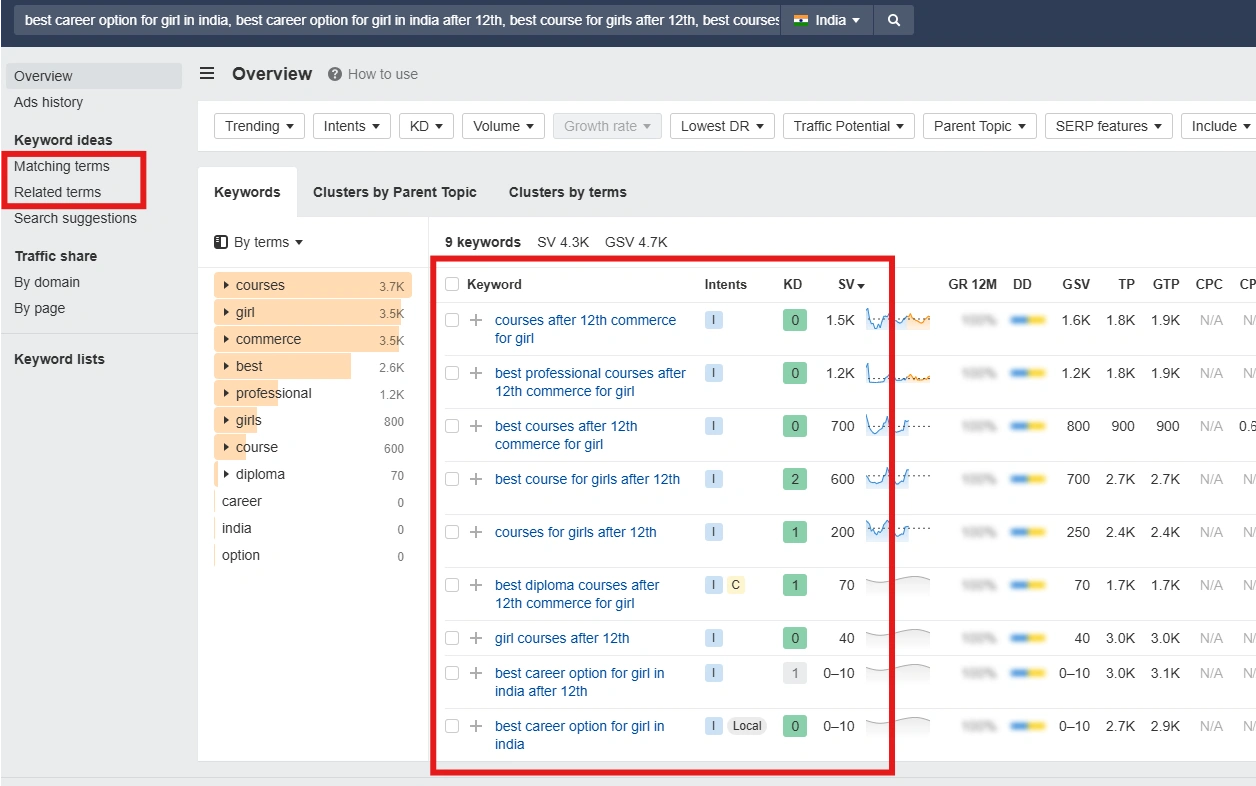
When it comes to keyword research, Ahrefs is probably the best-known and most powerful tool. Open Keyword Explorer, type in your keyword, and select the country you wish to target. It will show you:
- Related keywords
- Search volume
- Keyword difficulty
- Keyword ideas in question format
This helps you pick keywords that are easier to rank for and more relevant to your topic.

B. Google Keyword Planner (Free Tool)
If you're just starting out or or don't want to spend a dime on any kind of keyword tool, please consider using the Google Keyword Planner. This tool is completely free, though you will have to sign up for Google Ads first. Here’s how:
- Go to Google Keyword Planner
- Click on “Discover new keywords”
- Enter your topic (like courses after 12th commerce)
- Set your country to India or whichever location you are targeting
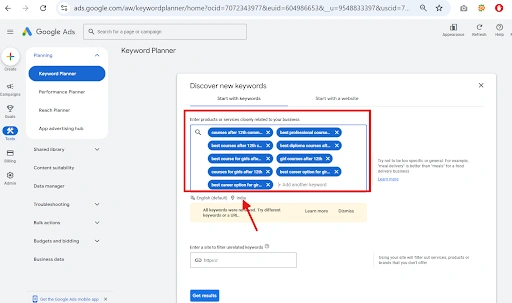
You’ll get a list of keyword ideas along with search volume and trends. You can also download these keywords and use them while planning your blog.
Option 2 - Check Competitor Pages and Their Keywords
Another smart way to find keywords is by studying what’s already working for others. Check out the top-ranking blogs or websites for your topic. These sites are already doing well on Google — so learning from them makes a lot of sense.
- Search Your Blog Topic in Google and Check the Top 5–6 Pages
Start by typing your blog topic into Google. Skip any sponsored or ad results at the top; focus on the organic listings. Open the top 5 to 6 websites or blog posts that are ranking on page 1. These are your competitors, and their content is already getting clicks. Read their titles, subheadings, and common phrases they’ve used — many of those are keywords.
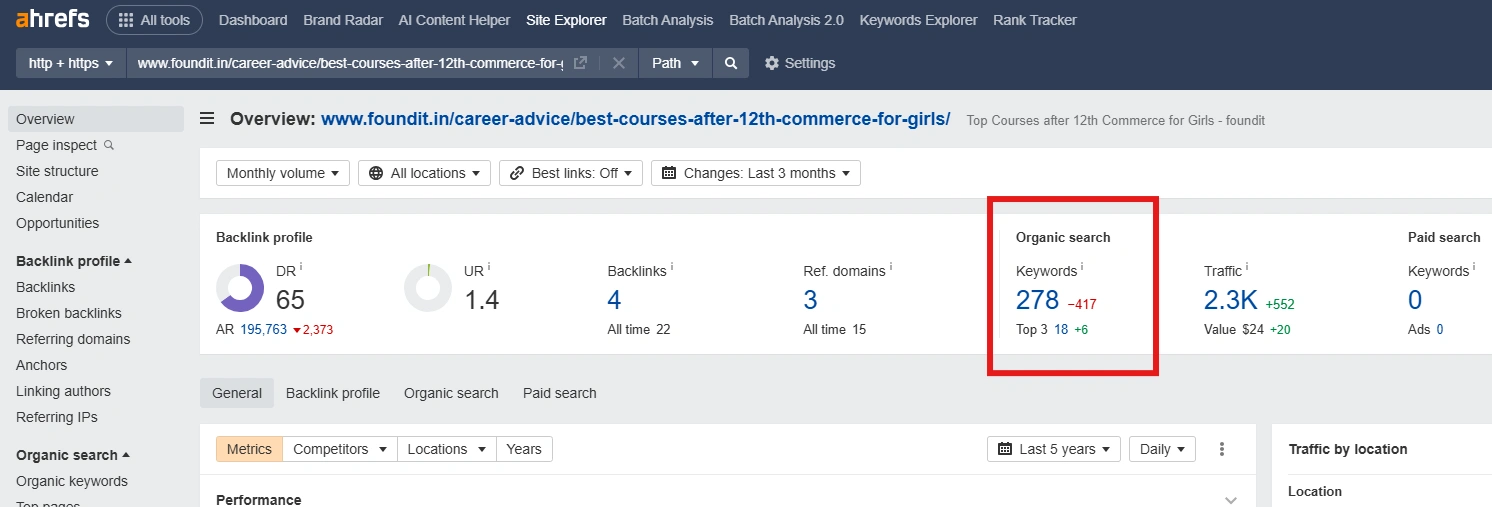
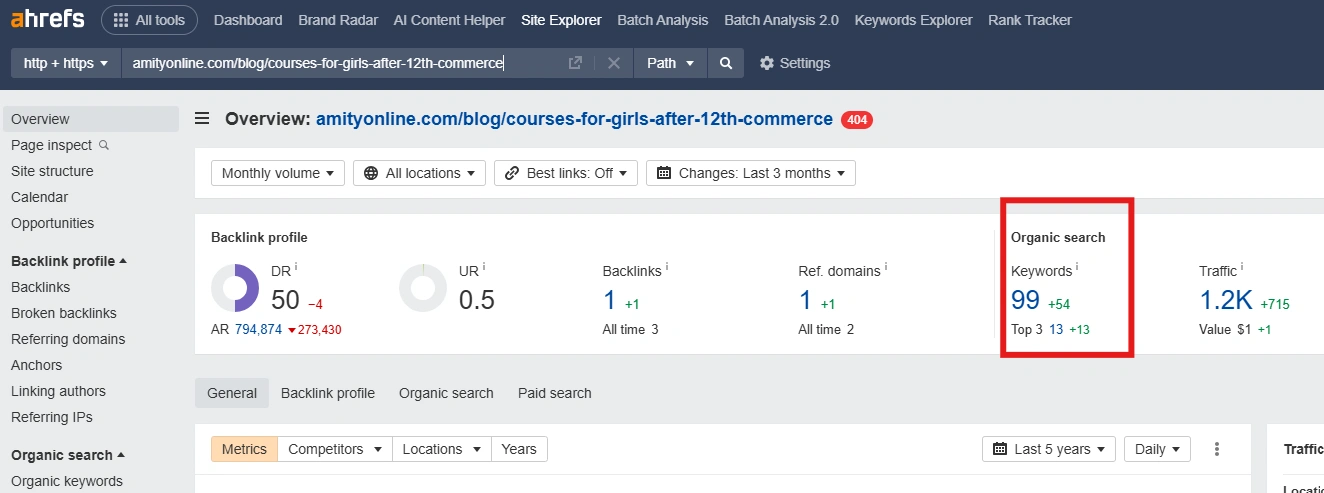
- Check Keywords of the First Two Ranked Pages Using Ahrefs
If you have access to Ahrefs, this step becomes even easier.
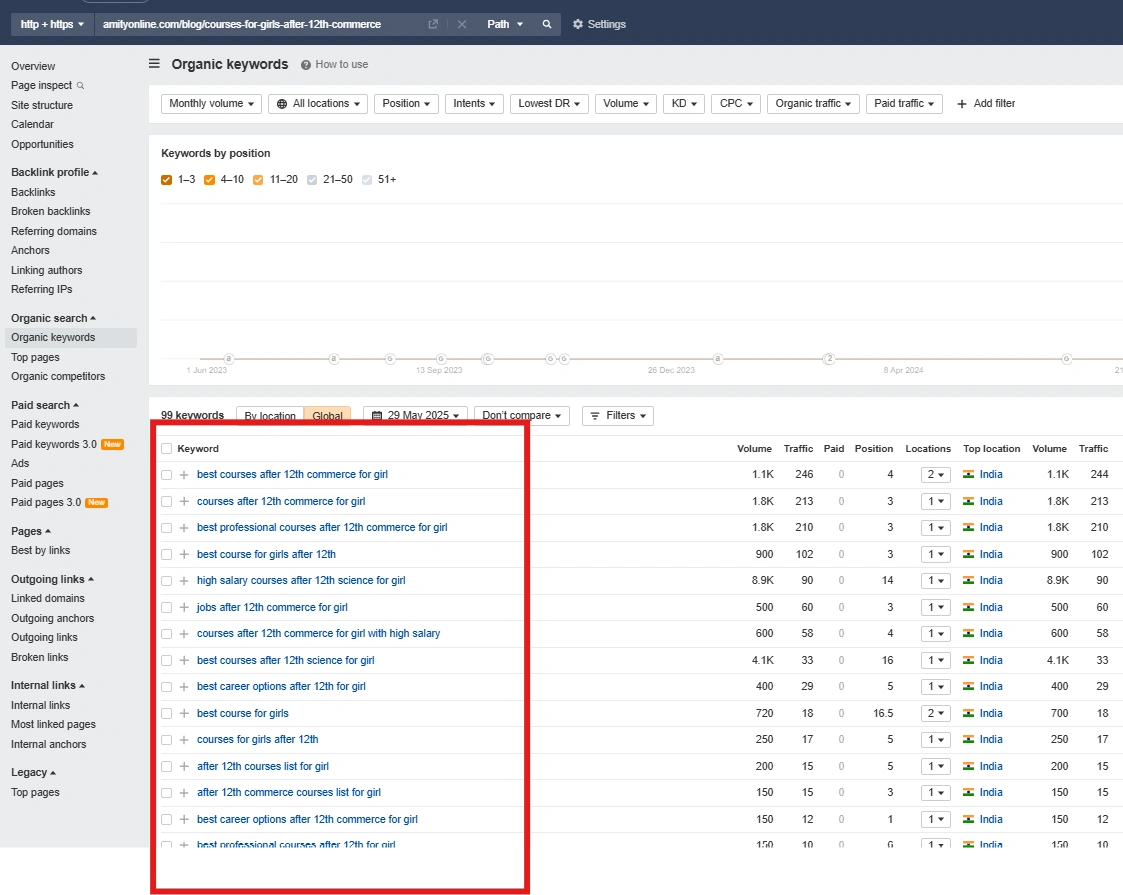
- Copy the URL of the first two ranking blog posts
- Paste each one into Ahrefs Site Explorer
- You’ll see all the keywords that page is ranking for
- Look for keywords with good volume and low or medium competition
This gives you a ready-made list of proven keywords you can target in your blog too.
Step 4 - Download Their Keyword Lists
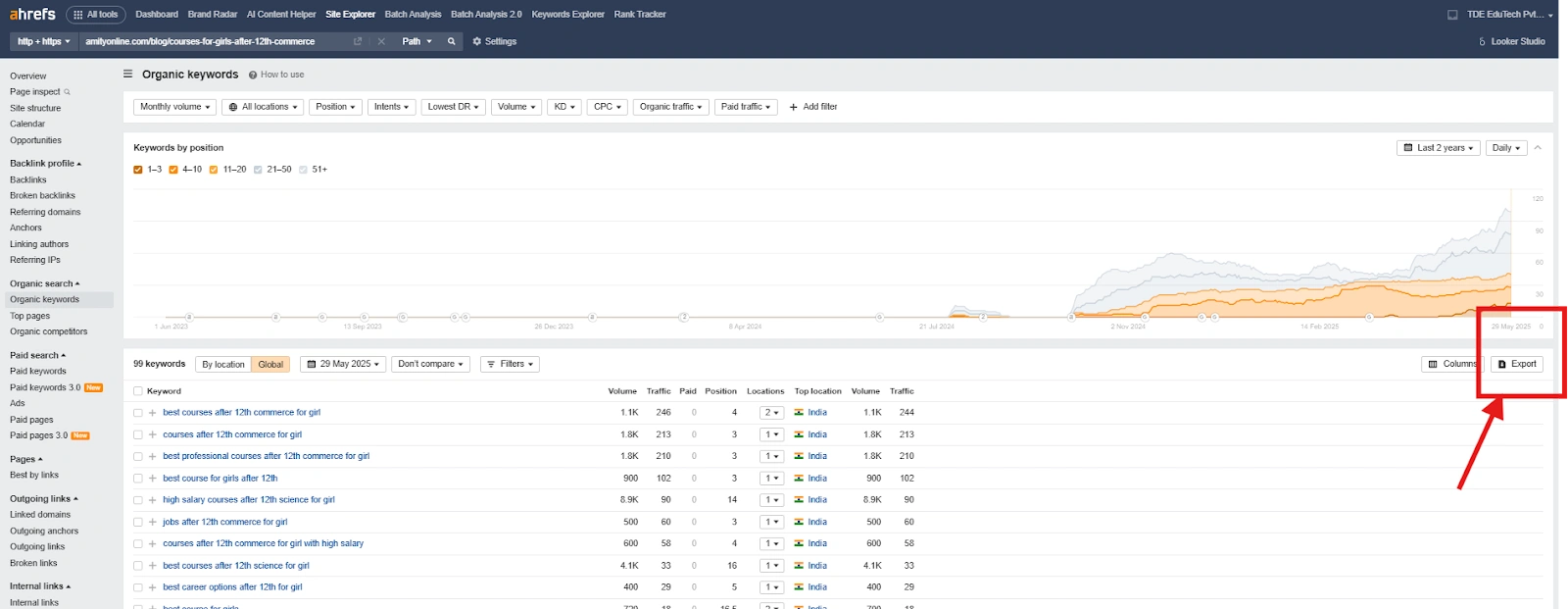
Once you find useful keywords from your competitor’s pages, download the list using Ahrefs. You can use these to build your own keyword map, and decide which keywords to use in your blog, headings, and content body. This saves time, shows you real-world results, and helps you stay one step ahead.
Step 5 - Choose Keywords That Are Suitable for Your Blog by Evaluating Them
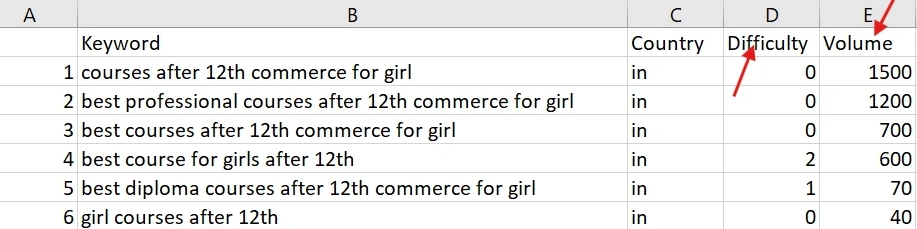
Once you have a big list of keyword ideas, it’s time to filter them down. You don’t need to use all of them; just pick the ones that are most relevant and useful for your blog. To do that, check two important things: search volume and keyword difficulty.
Check Search Volume
This tells you how many people are searching for a keyword every month. The higher the number, the more popular the keyword is.
But here’s a tip: bigger is not always better. If a keyword has a very high search volume, it often means there’s more competition. That makes it harder for a new blog to rank. So if you’re just starting out, try to target medium or low-volume keywords that still get regular searches — these are easier to rank for and still bring you traffic.
For example:
- “Best courses after 12th commerce” – High volume, more competition
- “Job-oriented courses after 12th commerce for girls” – Lower volume, less competition, more specific
Check Keyword Difficulty / Competition
This shows how hard it is to rank for a keyword. Tools like Ahrefs or Ubersuggest give this a score (usually from 0 to 100).
- Low difficulty (0–30): Easier to rank
- Medium difficulty (31–60): Needs better content and SEO
- High difficulty (61+): Tough to rank without strong domain authority
So, choose keywords that:
- Match your blog topic
- Have a decent search volume (even 200–500/month is fine for niche blogs)
- Have low to medium competition
This way, you get a real chance to rank higher and reach the right audience.